Queer Places:
Pratt Institute of Art and Design, 200 Willoughby Ave, Brooklyn, NY 11205, United States
273 5th Ave, New York, NY 10016, USA
315 5th Ave, New York, NY 10016, USA
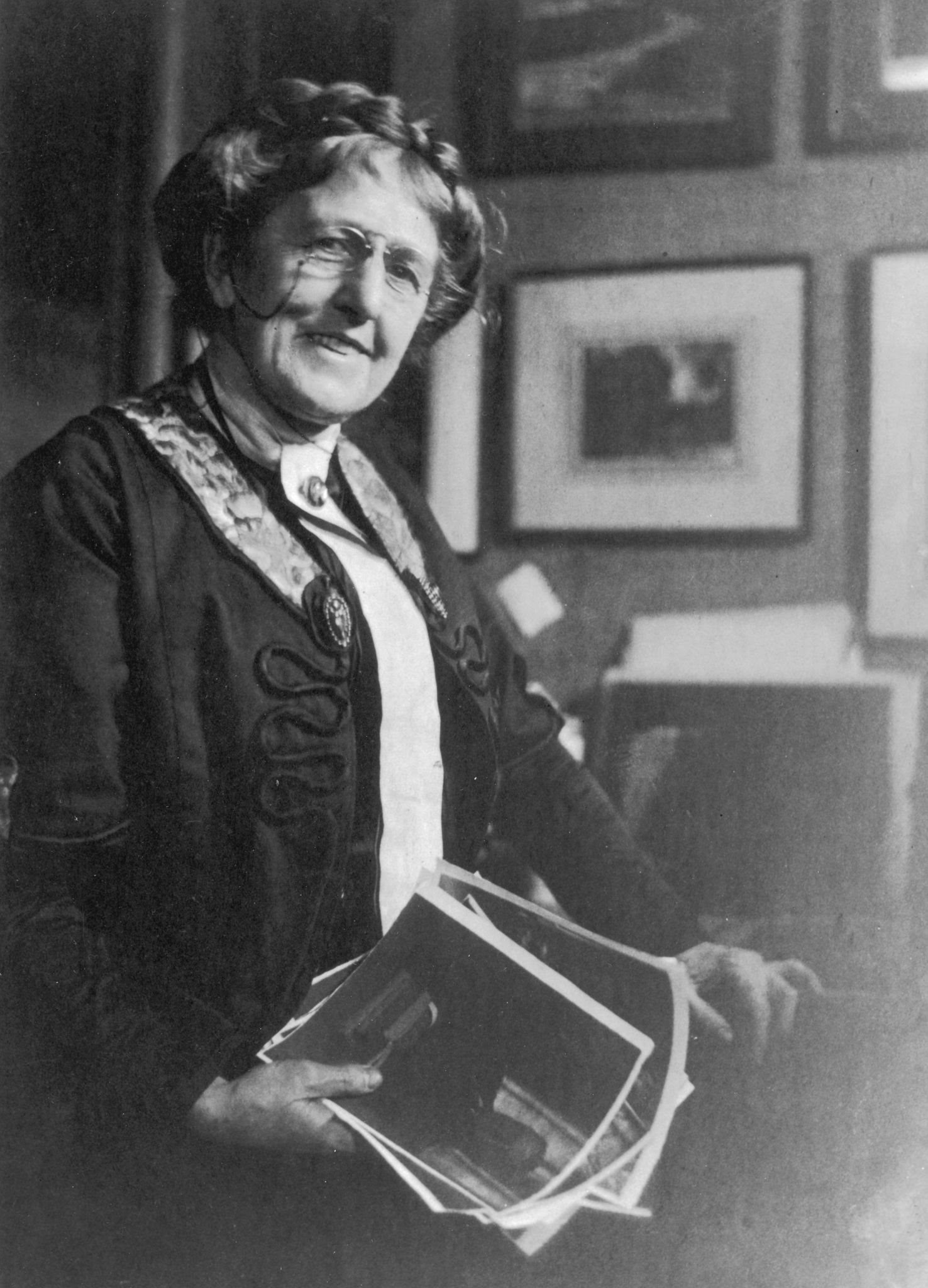 Gertrude Käsebier (May 18, 1852 – October 12, 1934) was a groundbreaking American portrait photographer and a founding member of the Photo-Secession movement alongside
Alfred Stieglitz. She was one of the most commercially successful and critically acclaimed female photographers of the early
20th century, renowned for her evocative Pictorialist style, intimate portraits of motherhood, and respectful, iconic portraits of Native Americans.
Gertrude Käsebier (May 18, 1852 – October 12, 1934) was a groundbreaking American portrait photographer and a founding member of the Photo-Secession movement alongside
Alfred Stieglitz. She was one of the most commercially successful and critically acclaimed female photographers of the early
20th century, renowned for her evocative Pictorialist style, intimate portraits of motherhood, and respectful, iconic portraits of Native Americans.
Born Gertrude Stanton in Des Moines, Iowa, she spent part of her childhood in a Colorado mining town before her family moved to Brooklyn. In 1874, she married Eduard
Käsebier, a shellac importer, and spent the next decade as a homemaker raising three children.
However, Käsebier found Victorian marriage deeply stifling, later remarking that she would rather "go to the stake" than re-live her early married years.
At age 37—unusual for women of her era—she enrolled at the Pratt Institute to study portrait painting.
While studying in Europe in the 1890s, she turned her focus to photography, realizing the camera offered a direct medium for psychological portraiture.
In 1897, she opened a commercial portrait studio in New York City. It quickly became a financial success and a hub for avant-garde artists, intellectuals, and
patrons.
Gertrude Käsebier’s famous commercial portrait studio on 5th Avenue in Manhattan was located at 273 5th Ave (between 29th and 30th Streets, just three blocks north of
Madison Square Park). Käsebier began taking commercial portraits around late 1897 and formally established her permanent studio at 273 Fifth Avenue by 1899. Rather than
renting space in a purely commercial loft with generic painted backdrop curtains and heavy Victorian furniture, Käsebier set up her portrait space in a brownstone house at
273 Fifth Avenue. She intentionally designed it like a refined, sunlit domestic interior, using natural light and simple furnishings to put her clients at ease. This
studio became her primary base during her peak years as a founding member of the Photo-Secession. It attracted high-society clients, artists, and fellow photographers
(including Edward Steichen and Alvin Langdon Coburn). Käsebier operated out of 273 Fifth Avenue through the 1900s before relocating her studio slightly further north to
315 5th Ave (at the corner of 32nd Street) in 1914.
Käsebier pioneered Pictorialism—an artistic movement that treated photography as a fine art equal to painting by focusing on mood, composition, and hand-manipulated
printing processes (such as platinum and gum bichromate) rather than raw mechanical reproduction.
While Käsebier lived during an era when modern sexual identities were not openly declared in public records, her life and studio were deeply woven into early
20th-century queer, feminist, and bohemian circles in New York City.
Käsebier was closely connected to Mabel Dodge Luhan, the bisexual arts patron whose 23 Fifth Avenue salon served as the
beating heart of New York’s radical intellectual and queer subculture in the 1910s.
Käsebier photographed Luhan and maintained ties with her circle of artists, writers, and political radicals.
Luhan’s salon brought together prominent queer women, suffragists, and modernists, bridging the worlds of Pictorialist art and radical social reform.
When Laura Gilpin was 12 years old, her mother took her to Käsebier’s New York studio for a portrait. The experience made a
lasting impression on young Gilpin, exposing her for the first time to a fiercely independent woman operating at the highest levels of fine-art portraiture.
When Gilpin decided to pursue photography seriously in her early twenties, she turned to Käsebier for guidance: Käsebier encouraged Gilpin to study at the Clarence H.
White School of Photography in New York, a leading institution for Pictorialism where Käsebier’s artistic philosophy held immense sway.
Their bond evolved from mentor-mentee into a deep, mutual friendship that endured until Käsebier’s death in 1934.
"Gertrude Käsebier was the one who told me to go to the Clarence White School. She was a grand old lady... her work had a painterly quality that influenced an entire
era." — Laura Gilpin.
By guiding Gilpin, Käsebier didn't just nurture a friend—she helped shape one of the Southwest’s most important 20th-century landscape and documentary photographers,
cementing a continuous chain of female and queer artistic leadership in American photography.
Though a generation apart, Käsebier and Berenice Abbott (the openly lesbian modernist photographer renowned for her
documentation of New York City) represent key pillars in the lineage of female photographers in New York.
Käsebier blazed the trail in the late 1890s and 1900s by proving that a woman could run an independent, world-class photography studio in NYC. This path opened doors
for Abbott and her contemporaries (such as Djuna Barnes and Gisèle Freund) in the
1920s.
In the mid-20th century, art historians and institutions recognized Käsebier and Abbott as the two pivotal figures who marked the evolution of American photography from
19th-century Pictorialism to 20th-century Modernist realism.
Käsebier's personal life reflected an implicit rejection of heteronormative expectations. She maintained an independent financial identity, lived separately from her
husband for extended periods, and formed deep, lifelong creative partnerships with independent female artists and patrons who challenged traditional gender roles.
References:
- Michaels, Barbara L. Gertrude Käsebier: The Photographer and Her Photographs. Abrams, 1992.
- Sandweiss, Martha A. Laura Gilpin: An Enduring Grace. Amon Carter Museum, 1986.
- Luhan, Mabel Dodge. Intimate Memories (4 volumes). Harcourt, Brace and Company, 1933–1937.
- Mabel Dodge Luhan Papers — Beinecke Rare Book and Manuscript Library, Yale University
- Laura Gilpin Papers — Amon Carter Museum of American Art, Fort Worth, Texas
- Gertrude Käsebier Collection — National Museum of American History, Smithsonian Institution
- National Museum of Women in the Arts (NMWA) — Artist Profile: Gertrude Käsebier
- Clarence H. White School of Photography Records — International Center of Photography (ICP) / Library of Congress
Support this project
This website is a passion project researched, developed, and funded entirely by me. If you find the content valuable and would like to help support the ongoing research and hosting costs, any contribution is deeply appreciated.
Thank you for keeping this independent resource alive!
My books on Amazon: Elisa Rolle's books
BACK TO HOME PAGE